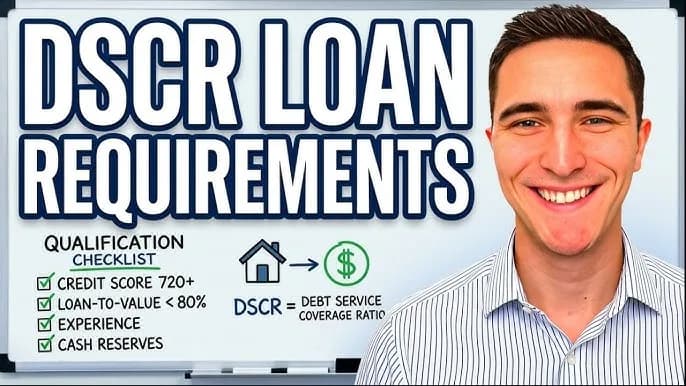
DSCR Loan Requirements: Complete Guide for Real Estate Investors

Written By
Liton IslamPublished
Updated
Introduction
Debt Service Coverage Ratio (DSCR) loans have become one of the most popular financing options for real estate investors. Unlike traditional mortgages that rely heavily on personal income and employment history, DSCR loans focus on the cash flow generated by an investment property.
This financing approach allows investors to qualify based on property performance rather than tax returns or W-2 forms. As a result, DSCR loans are increasingly used by investors looking to grow their rental property portfolios.
In this guide, we'll break down DSCR loan requirements, qualification criteria, credit score expectations, down payment guidelines, and everything investors need to know before applying.
What Is a DSCR Loan?
A DSCR loan is a mortgage designed for real estate investors. Lenders evaluate whether a property's rental income can cover its debt obligations rather than analyzing the borrower's personal income.
The Debt Service Coverage Ratio measures the relationship between a property's income and its mortgage payments.
DSCR Formula
DSCR = Gross Rental Income ÷ Total Monthly Debt Payment
For example:
-
Monthly rental income: $4,000
-
Monthly mortgage payment: $3,200
DSCR = 1.25
A ratio of 1.25 means the property generates 25% more income than needed to cover debt payments.
Why Lenders Use DSCR
Traditional lenders typically focus on:
-
Employment history
-
Tax returns
-
Pay stubs
-
Debt-to-income ratio
DSCR lenders focus primarily on:
-
Rental income
-
Property cash flow
-
Property value
-
Investor credit profile
This simplified approach makes financing more accessible for self-employed investors and property owners with multiple investments.
DSCR Loan Requirements in 2026
Although requirements vary by lender, most DSCR loan programs follow similar qualification standards.
1. Minimum DSCR Ratio
The most important requirement is the property's Debt Service Coverage Ratio.
Typical lender requirements include:
| DSCR Ratio | Qualification Strength |
|---|---|
| Below 1.00 | Difficult to qualify |
| 1.00 | Minimum acceptable for some lenders |
| 1.10 – 1.24 | Good qualification range |
| 1.25+ | Preferred by many lenders |
| 1.50+ | Excellent cash flow profile |
A higher DSCR often results in better loan terms and lower interest rates.
2. Credit Score Requirements
Most lenders require a minimum credit score between:
-
620+
-
660+
-
680+
Investors with scores above 720 often receive more competitive loan pricing.
Higher credit scores demonstrate lower lending risk and may increase approval chances.
3. Down Payment Requirements
DSCR loans generally require larger down payments than owner-occupied mortgages.
Common requirements include:
-
20% down payment
-
25% down payment
-
30% down payment for certain property types
Factors affecting down payment requirements:
-
Credit score
-
Property type
-
DSCR ratio
-
Loan amount
-
Occupancy strategy
Vacation rentals and short-term rentals may require higher equity contributions.
4. Property Appraisal
A lender-approved appraisal is required to determine:
-
Property market value
-
Estimated rental income
-
Property condition
-
Investment viability
Many lenders order a rental schedule or market rent analysis during the appraisal process.
The appraiser's rent estimate often plays a significant role in determining DSCR eligibility.
5. Cash Reserve Requirements
Many lenders require investors to maintain cash reserves after closing.
Typical reserve requirements range from:
-
3 months of mortgage payments
-
6 months of mortgage payments
-
12 months for larger portfolios
Cash reserves demonstrate financial stability and provide protection against vacancy periods.
6. Property Eligibility Requirements
Most DSCR lenders finance:
-
Single-family homes
-
Condominiums
-
Townhomes
-
Duplexes
-
Triplexes
-
Fourplexes
-
Vacation rentals
-
Short-term rental properties
Property condition must generally meet lender standards.
Severely distressed properties may require alternative financing solutions.
7. Entity Ownership Options
Many investors prefer purchasing properties under:
-
LLCs
-
Corporations
-
Partnerships
-
Trusts
Several DSCR lenders allow financing through business entities, helping investors separate personal and business assets.
8. Loan Amount Requirements
Minimum loan amounts typically start around:
-
$75,000
-
$100,000
Maximum loan amounts can exceed:
-
$1 million
-
$2 million
-
$5 million or more
Loan limits vary by lender and investor profile.
Documents Needed for a DSCR Loan
One major advantage of DSCR financing is reduced documentation requirements.
Investors commonly need:
-
Government-issued identification
-
Purchase contract
-
Property insurance information
-
Bank statements
-
Credit authorization
-
Property appraisal
Unlike conventional loans, tax returns and employment verification are often unnecessary.
DSCR Loan Requirements for Short-Term Rentals
Short-term rental investments have become increasingly popular.
Many lenders now offer DSCR programs specifically for:
-
Airbnb properties
-
Vacation rentals
-
Seasonal rental properties
Requirements may include:
-
Rental history
-
Market rental analysis
-
Occupancy projections
-
Property management details
These programs can help investors capitalize on tourism-driven markets.
Factors That Improve DSCR Loan Approval Chances
Investors can strengthen their applications by:
Maintaining Strong Credit
Higher credit scores often lead to:
-
Better rates
-
Lower fees
-
Easier approval
Increasing Down Payment
More equity reduces lender risk.
Choosing Cash-Flowing Properties
Properties with strong rental income typically qualify more easily.
Building Cash Reserves
Demonstrating financial stability helps lenders feel more comfortable approving larger loans.
Common Reasons DSCR Loans Get Denied
Applications may be denied due to:
-
Low DSCR ratio
-
Poor credit history
-
Insufficient reserves
-
Property condition issues
-
Excessive leverage
-
Unstable investment projections
Investors should review lender guidelines carefully before applying.
Benefits of Meeting DSCR Loan Requirements
When investors meet qualification standards, they gain access to several advantages:
-
No traditional income verification
-
Faster approvals
-
Easier portfolio expansion
-
Flexible ownership structures
-
Financing for multiple properties
-
Simplified underwriting process
These benefits make DSCR loans attractive for both new and experienced investors.
DSCR Loan Requirements vs Conventional Loan Requirements
DSCR Loan
-
Property income focused
-
Limited personal income verification
-
Designed for investors
-
Flexible qualification process
Conventional Investment Loan
-
Personal income required
-
Tax returns required
-
Debt-to-income calculations required
-
Stricter underwriting standards
For many investors, DSCR financing offers a more practical path to acquiring income-producing real estate.
Final Thoughts
Understanding DSCR loan requirements is essential for real estate investors seeking financing in today's competitive market. Lenders primarily focus on the property's ability to generate enough rental income to cover mortgage payments, making these loans an attractive option for investors who may not qualify under traditional lending standards.
By maintaining strong credit, selecting cash-flow-positive properties, and meeting reserve and down payment requirements, investors can improve their chances of approval and secure financing for future investment opportunities. Whether you're purchasing your first rental property or expanding an established portfolio, a DSCR loan can be a valuable tool for long-term real estate growth.
"Hello, its Liton ds;jfshdgdg dhkgsdhk; gdshkgfhsd gsdg "
Comments (0)
Leave a Comment
Thoughts (0)
Loading insights...